Where you wake up in New York shapes the city you see. These five hotels each offer a distinctly different kind of stay; the guide at the end matches each to a type of trip.
Where to stay: Midtown, Tribeca or Lower Manhattan
MidtownBaccarat Hotel New York, Waldorf Astoria New York
Midtown gathers many of the city's best-known landmarks — Times Square, Broadway, Rockefeller Center, St. Patrick's Cathedral — and spans several districts, from business-minded Midtown East to the Broadway-led Theatre District. From a hotel in Midtown, the shops of Fifth and Madison Avenues, the exhibitions at the Museum of Modern Art and the views from the Empire State Building are all in the same part of the city. Choose Midtown for a stay centred on theatre, shopping and the city's most familiar sights.
TribecaFour Seasons Hotel New York Downtown
Tribeca offers views of the Hudson River on its western border, has restaurants of note across the neighbourhood and hosts the annual Tribeca Festival, which premieres new films in the city. Tribeca rewards a stay organised around its restaurants.
Lower ManhattanThe Beekman
Lower Manhattan pairs skyscrapers, financial institutions and new developments with cultural landmarks, and at street level mixes historic parks and major museums with old and new shops, bars and restaurants. Lower Manhattan fits a stay focused on the city's history and its museums.
Baccarat Hotel New YorkMidtown, refined to a single idea
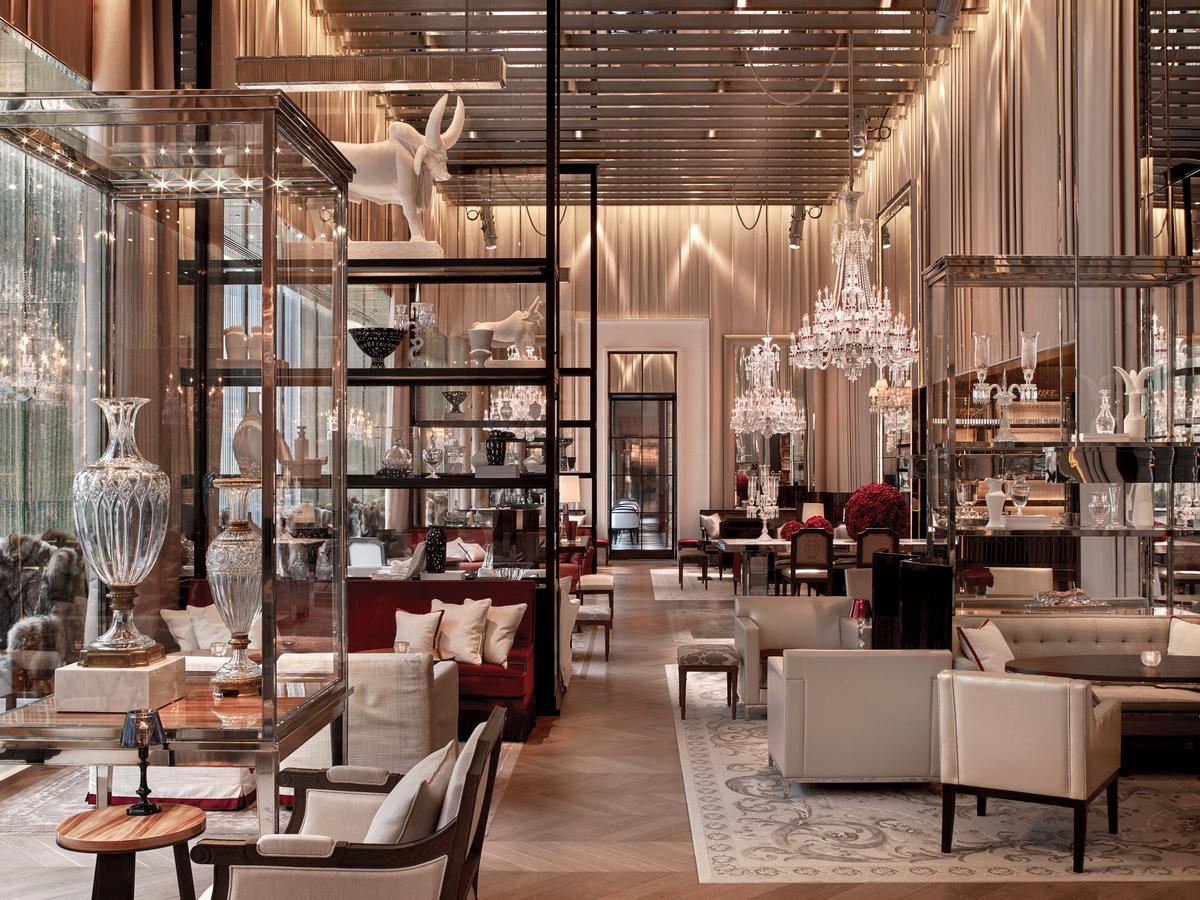
Midtown, as NYC Tourism puts it, is an eruption of noise, flash and colour. Baccarat Hotel New York sits at 20 West 53rd Street, directly across from the Museum of Modern Art and steps from Fifth Avenue, but it operates at a different frequency than its surroundings. The building itself, by Skidmore Owings & Merrill, has a prismatic glass façade that recalls the radiance of Baccarat crystal.
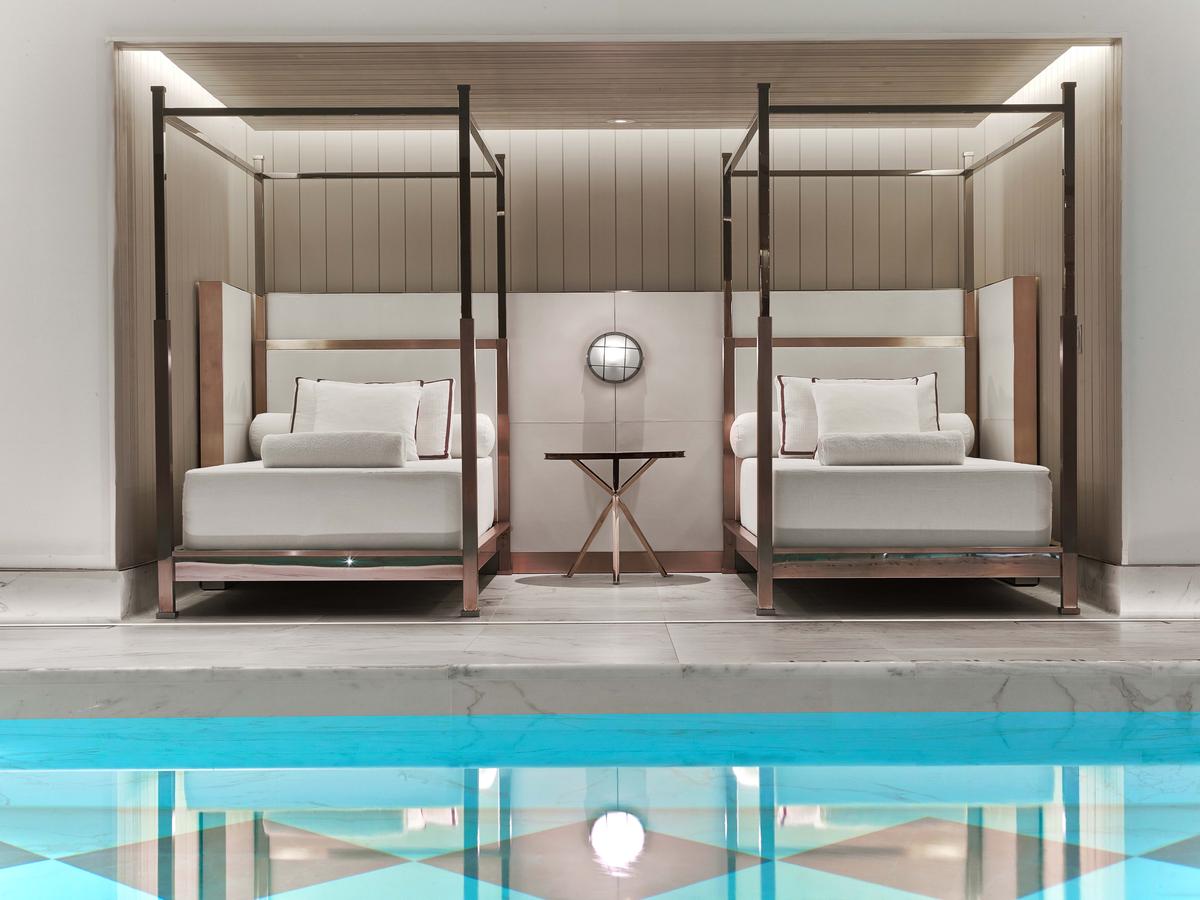
The through-line is the French crystal brand Baccarat, founded in 1764 — and the hotel follows that logic consistently. The adjacent Bar has barrel-vaulted ceilings and a 60-foot bar; beyond it, the seasonal Le Jardin terrace overlooks MoMA. Below ground, La Piscine is a heated indoor swimming pool; Spa de La Mer is, in the hotel's words, the first dedicated La Mer spa in the United States.
For suite guests, a dedicated Attaché handles reservations, private experiences and the logistics of the stay. This is the Baccarat stay at its most complete: a coherent aesthetic world, tended by someone whose entire role is to keep the seams invisible.
Waldorf Astoria New YorkMidtown, at a different scale
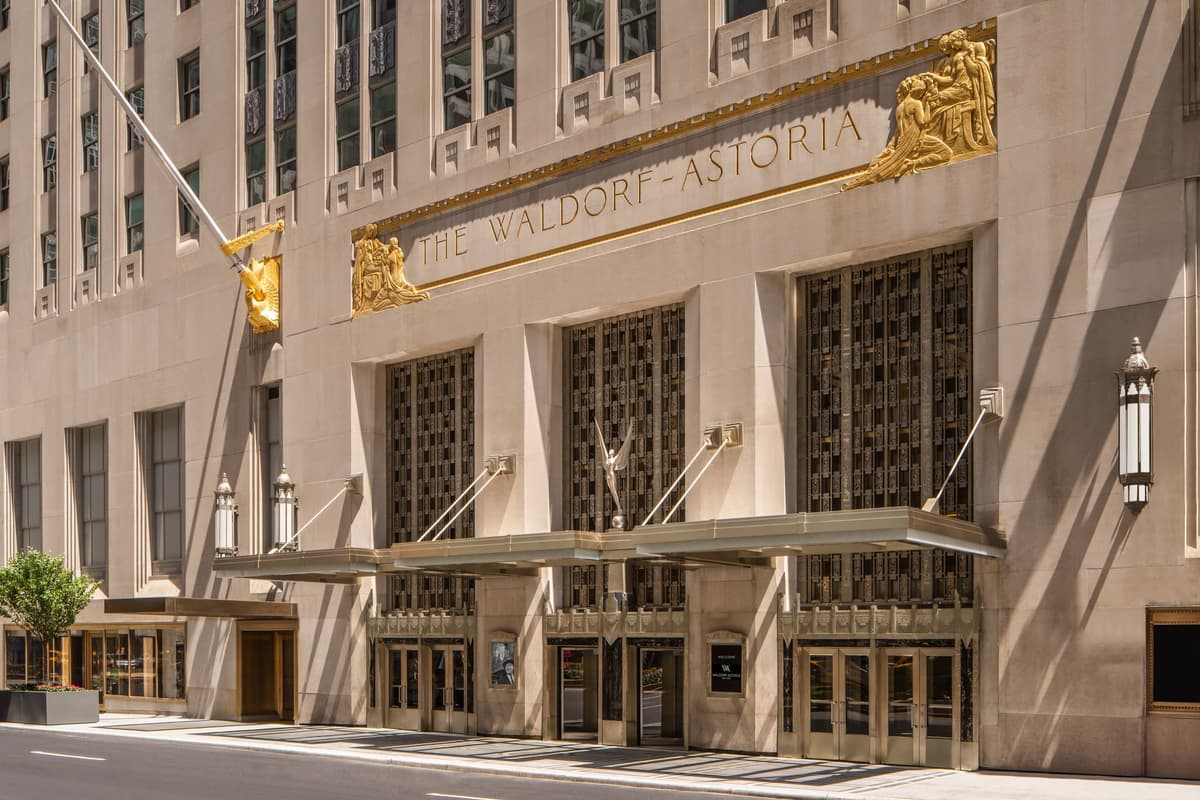
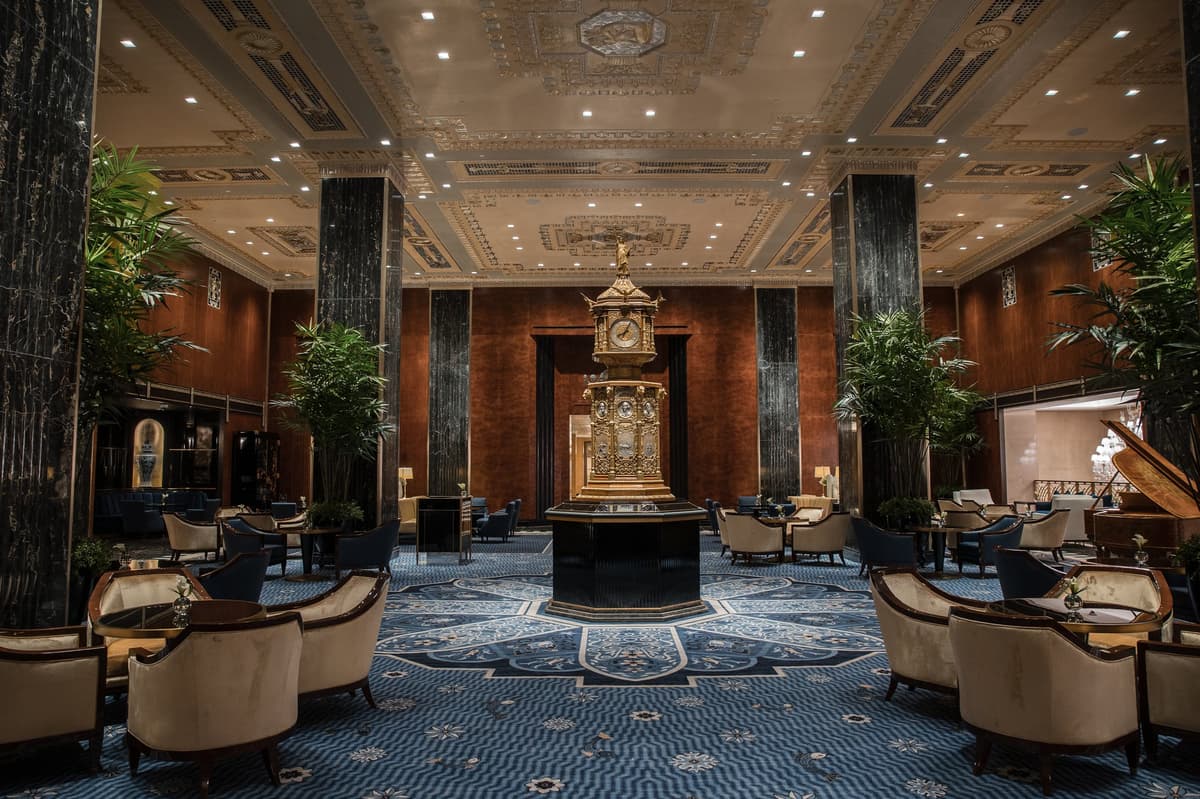
Following an extensive restoration by Skidmore, Owings & Merrill, with interiors by Pierre-Yves Rochon, the Art Deco architecture has been preserved and reinterpreted: the 1893 World's Fair clock, a two-ton bronze piece, sits in the lobby. The hotel has 375 guest rooms and suites across eleven categories, and a Grand Ballroom with a private 49th Street entrance.
Peacock Alley hosts "Cole & Friends", an intimate nightly musical residency in tribute to Cole Porter, one of the hotel's most famous long-term residents. Guest performers play alongside "High Society", the 1907 custom-built Steinway grand piano the hotel gave to Porter and on which, the hotel says, he composed many of his greatest hits. Here the hotel's history is something to hear in the evening, not only something to see in the lobby. Lex Yard, led by chef Michael Anthony, is an American brasserie serving breakfast, lunch and dinner with a focus on seasonal ingredients.
The 22,000-square-foot Guerlain Wellness Spa adds an infra-red sauna, Moroccan hammam and Arctic Snow Cave to a full treatment menu and fitness centre. The Waldorf suits a stay that benefits from scale — events, extended itineraries, or simply wanting the full breadth of a major hotel operating at its own momentum.
Four Seasons Hotel New York DowntownTribeca, with room to move
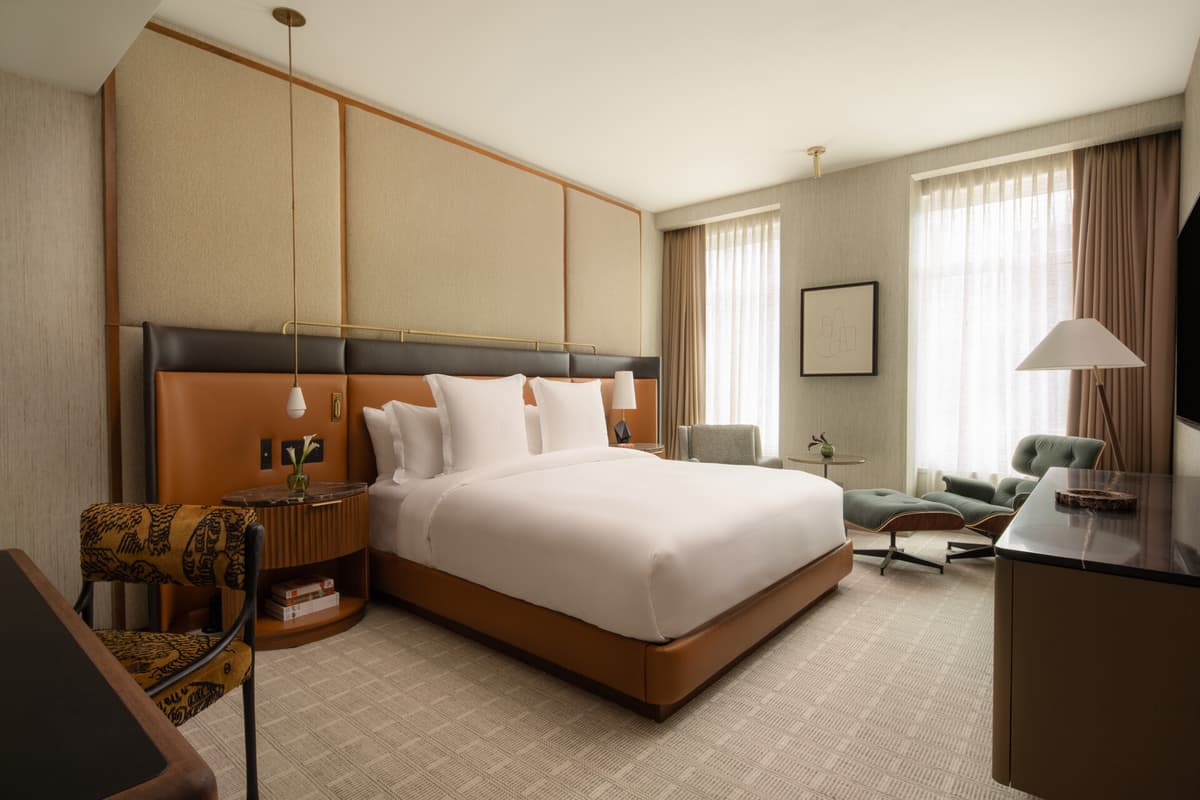
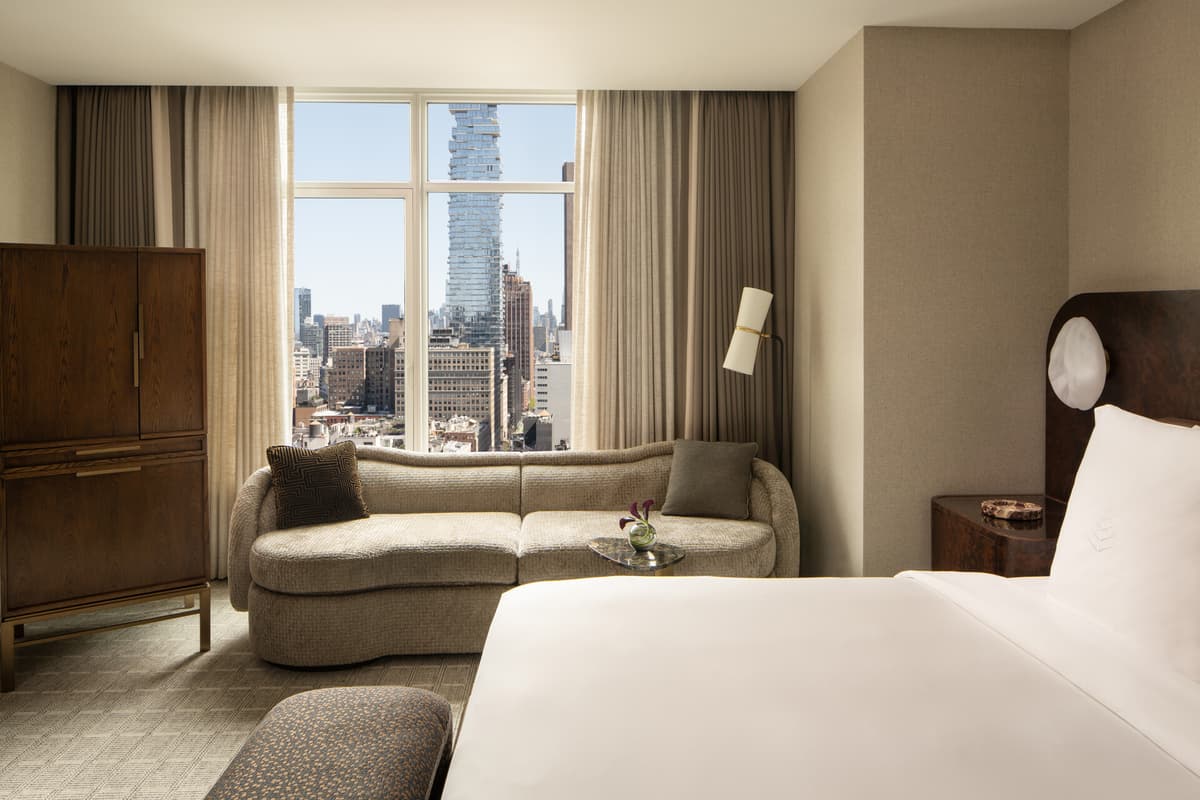
Once industrial warehouses, Tribeca is now, according to NYC Tourism, the land of celebrity-owned lofts. Four Seasons Hotel New York Downtown sits where Tribeca meets the Wall Street Financial District, a block from the World Trade Center.
The hotel's pool is a specific asset worth naming: a 75-foot, three-lane indoor lap pool at a depth of four feet. The spa has seven treatment rooms including a Couple's Suite, with an outdoor relaxation terrace and sundeck. CUT by Wolfgang Puck, an American steakhouse, is the in-house restaurant.
This is a practical hotel in the best sense: well-resourced, physically capable and positioned at a junction that makes a significant portion of lower Manhattan navigable without strategy. For a stay where the city is the programme and the hotel is the base, the geography does real work.
The BeekmanLower Manhattan, where the building earns its place
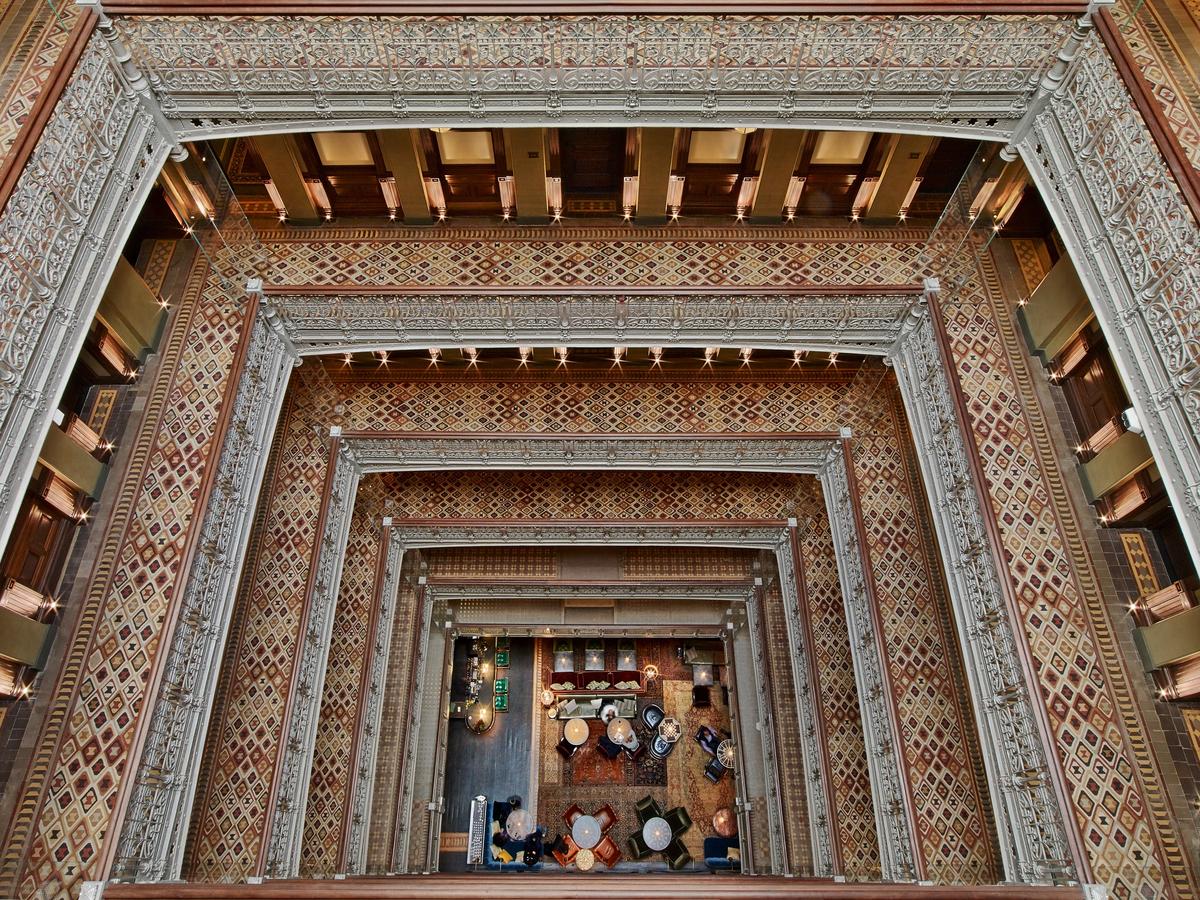
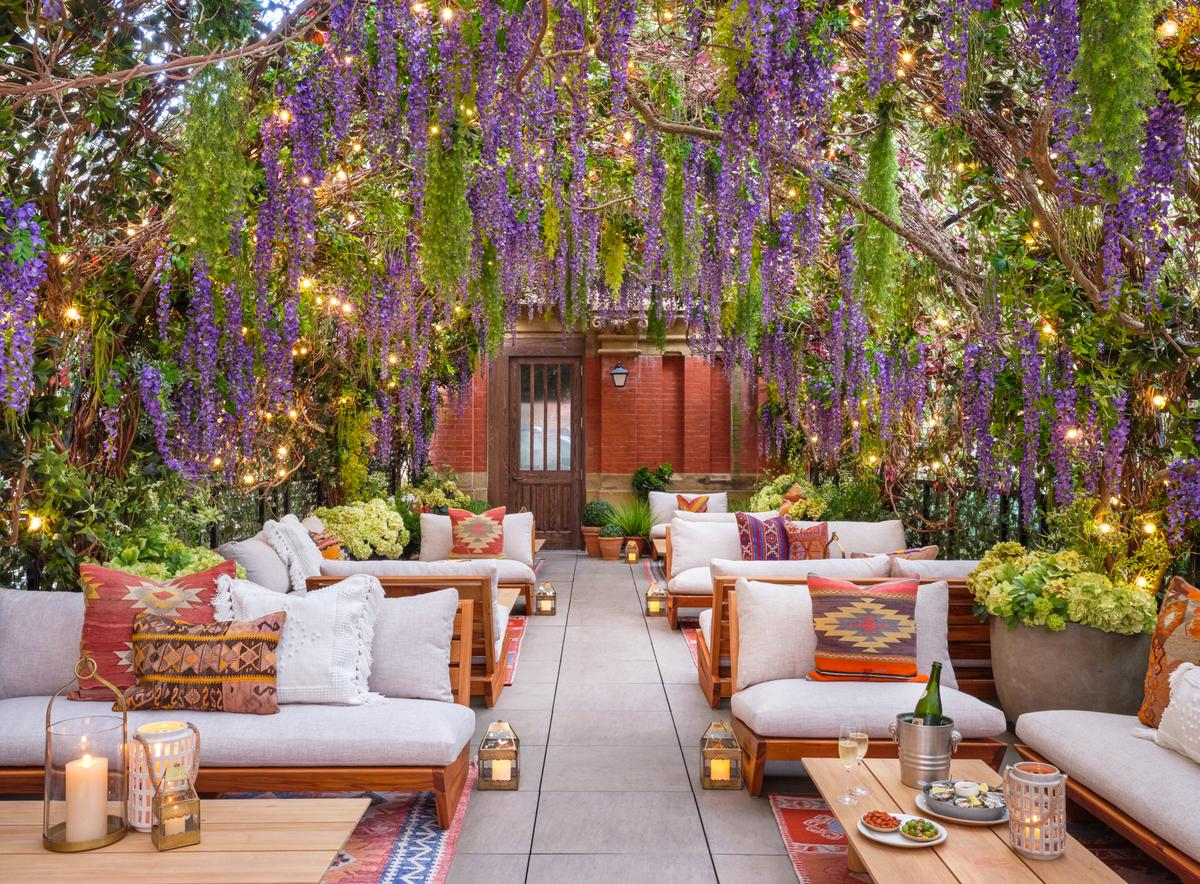
Lower Manhattan, NYC Tourism notes, is where the city started in the 1600s. The Beekman occupies a building with its own place in that continuity: it was Temple Court, one of Manhattan's original skyscrapers, completed in 1883, the same year as the Brooklyn Bridge.
The culinary programme is built around named chefs in a way that drives the character of the place. Le Gratin, by chef Daniel Boulud, is a Bouchon Lyonnais inspired by the bouchons and bistros of Lyon — casual in register, with a focus on Lyonnais-style cuisine and warm service. Laissez Faire, a bespoke cocktail lounge, is located at 10 Theatre Alley within the hotel. For guests seeking something more private, both Turret Penthouses — East and West — offer a private rooftop terrace and a duplex layout with a lofted master bedroom in a 40-foot tower.
Nearby landmarks include the Brooklyn Bridge and the 9/11 Memorial & Museum. The building is the attraction as much as anything around it — nineteenth-century structure, twenty-first-century table.
The Ned NoMad1170 Broadway, built for the sociable guest
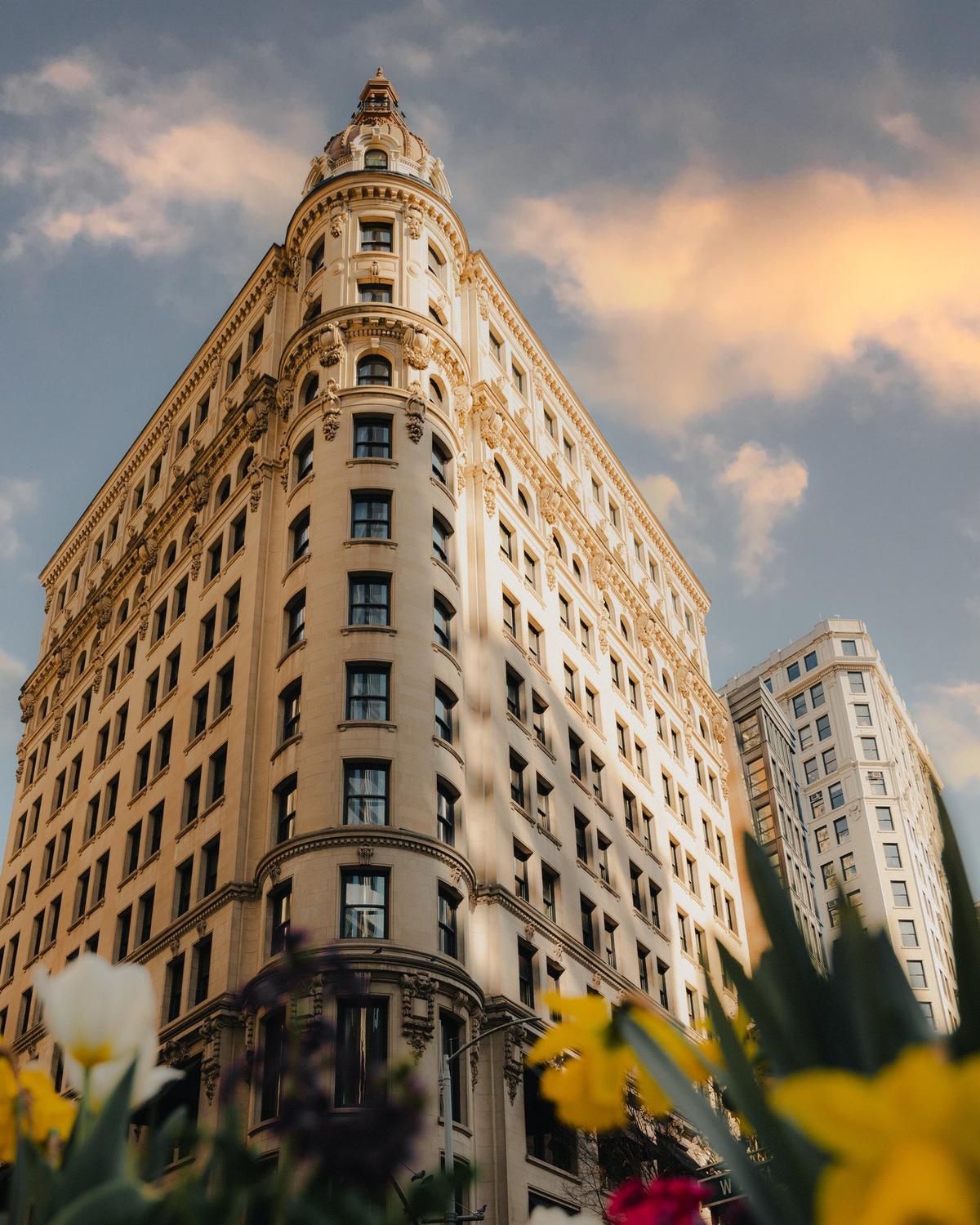
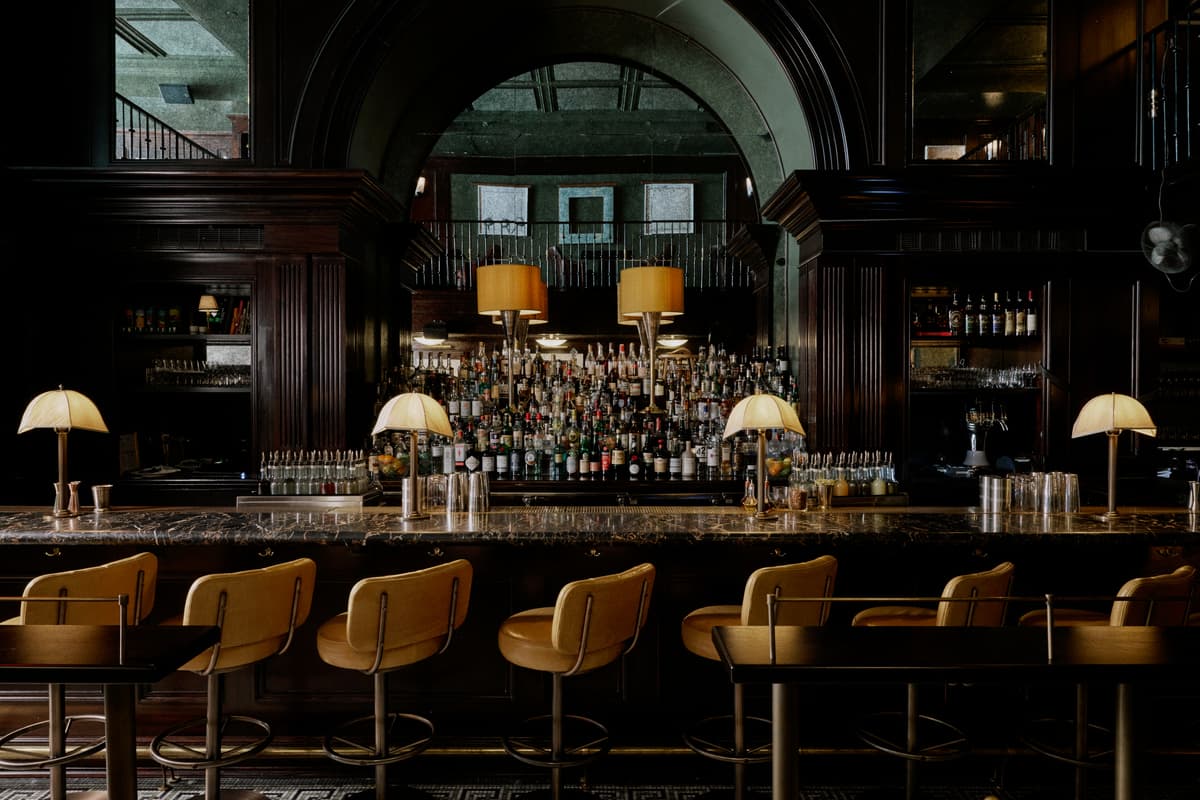
The Ned NoMad is at 1170 Broadway, New York 10001. Deluxe rooms and Atrium Studios have Beaux-Arts touches in keeping with the era of the building, and all 167 bedrooms carry a nod to 1920s glamour.
What distinguishes the Ned NoMad is the density of what comes with a hotel stay. Cecconi's is a modern-day Italian restaurant open for breakfast, lunch and dinner, seven days a week. Little Ned serves bar staples and classic cocktails. Hotel guests also have access — subject to availability — to Ned's Club Downstairs, which includes The Atrium, The Library, the Elephant Bar and The Dining Room. A seasonal rooftop space offers a terrace restaurant and bar with views of the Empire State Building.
The Ned NoMad is a hotel where the offer broadens as the day progresses, and one that suits guests whose preference is to move through multiple spaces without leaving the building.
Choosing between them
The five hotels share a city and a category. Beyond that, the differences are real.
- Baccarat Hotel New York — for a stay inside one coherent aesthetic, carried from façade to spa and most fully realised for suite guests, who have a dedicated Attaché.
- Waldorf Astoria New York — for a stay that benefits from scale and history: a restored Art Deco landmark on a full city block, with a Grand Ballroom and Cole Porter's piano in Peacock Alley.
- Four Seasons Hotel New York Downtown — for a stay where the city is the programme and the hotel is the base: a location where Tribeca meets the Financial District, and a lap pool for guests who swim.
- The Beekman — for a stay in one of Manhattan's original skyscrapers, completed in 1883, with Le Gratin, a Bouchon Lyonnais by chef Daniel Boulud, and Laissez Faire, a bespoke cocktail lounge.
- The Ned NoMad — for a sociable stay that moves between Cecconi's, Little Ned and, subject to availability, Ned's Club Downstairs without leaving the building.