Kyoto · Japan
Aman Kyoto occupies a private forest at the northern edge of the city.
Autumn in Kyoto already asks something of you — a willingness to be quieted. Aman Kyoto answers that ask completely, settled at the edge of a private forest where the city's ceremonies feel close but not intrusive. Stone, water, moss. The rooms hold their silence. A stay here recalibrates something you didn't know needed recalibrating.
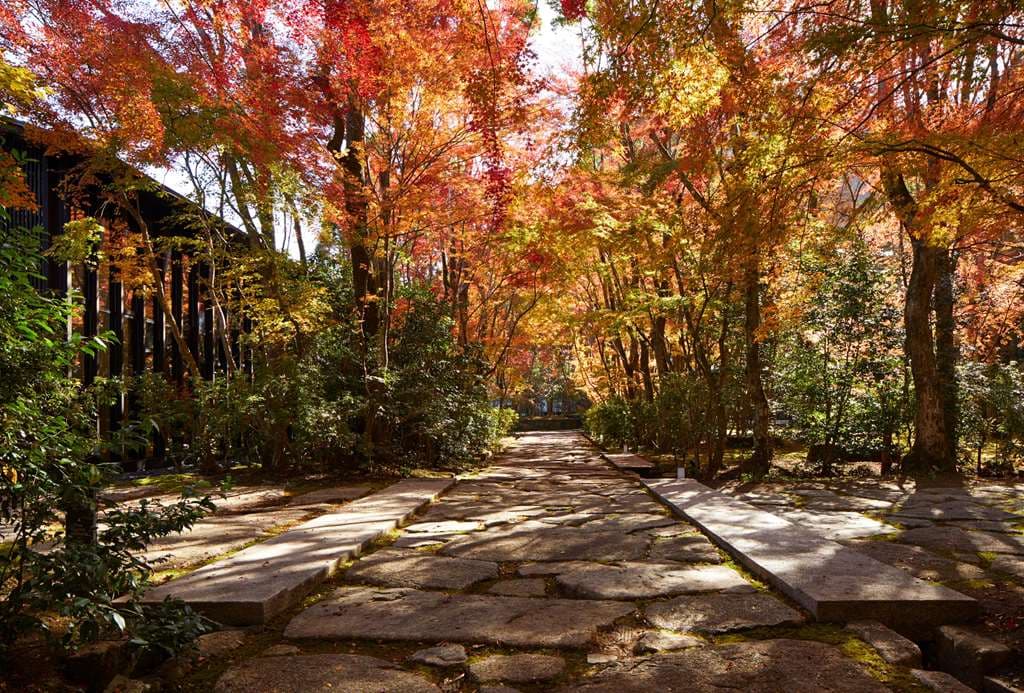
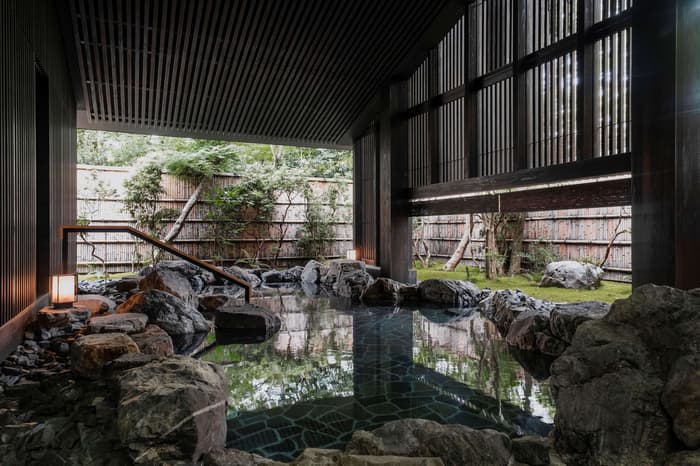
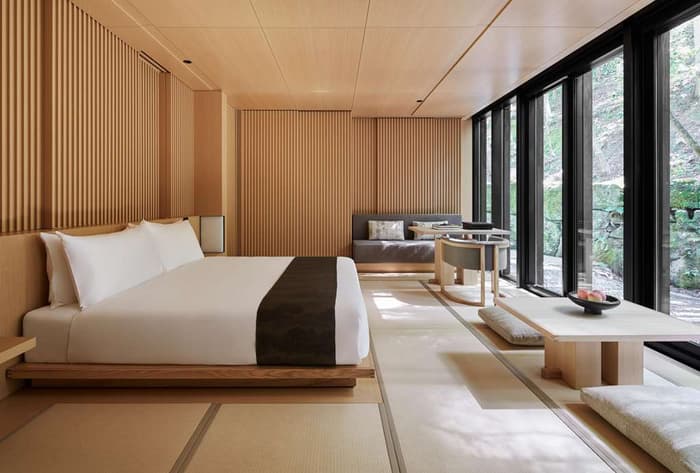
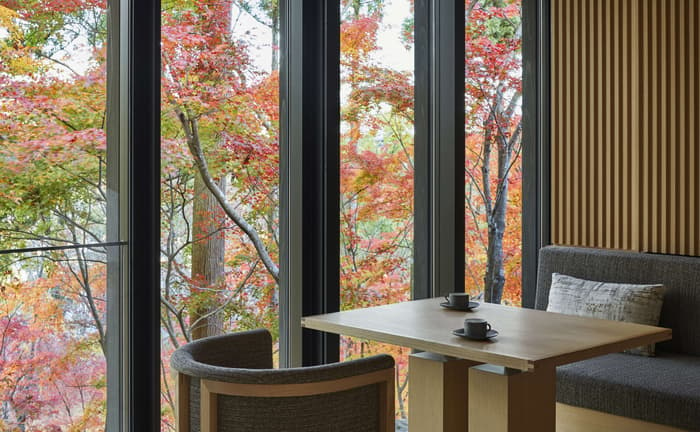
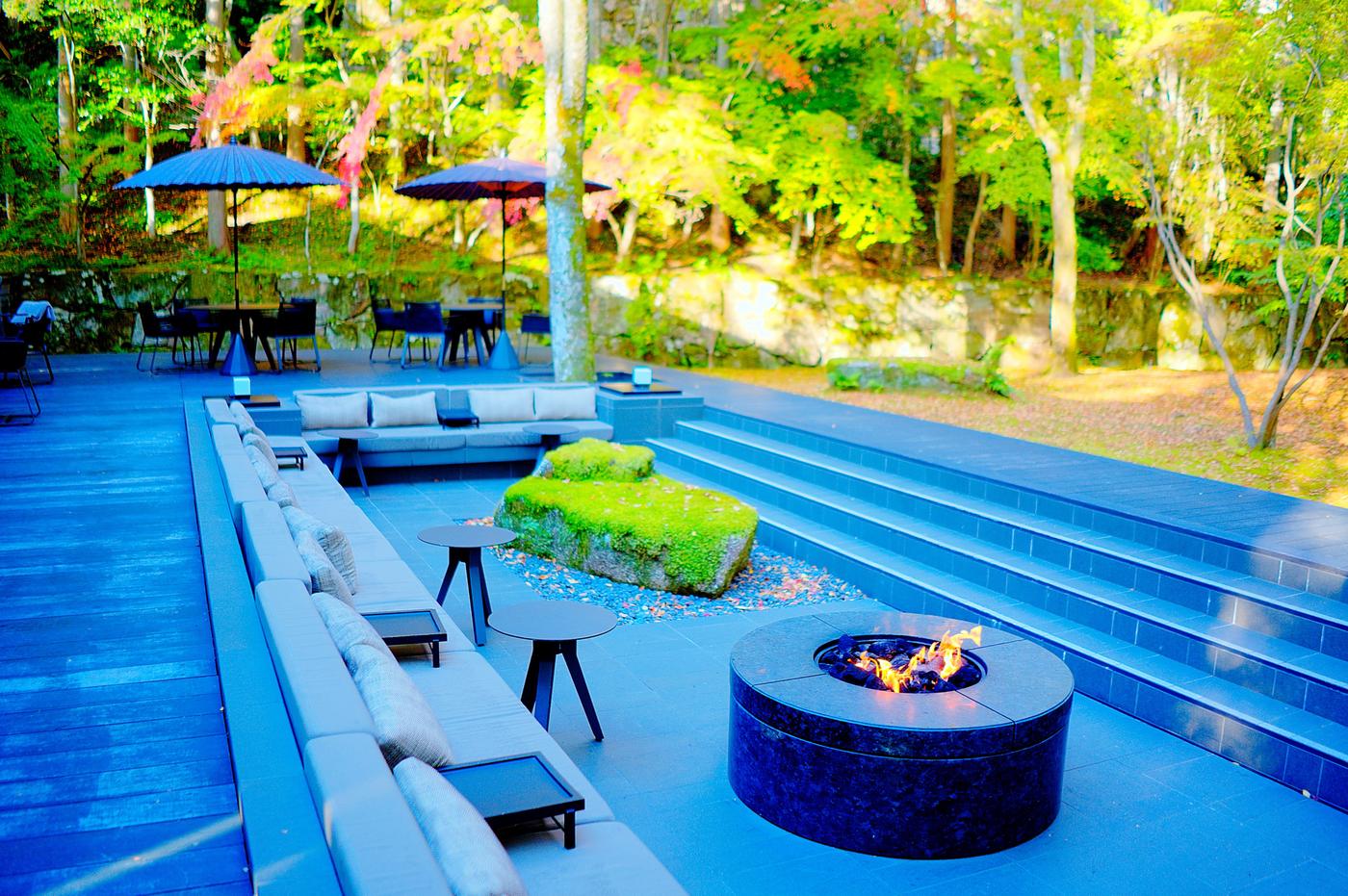
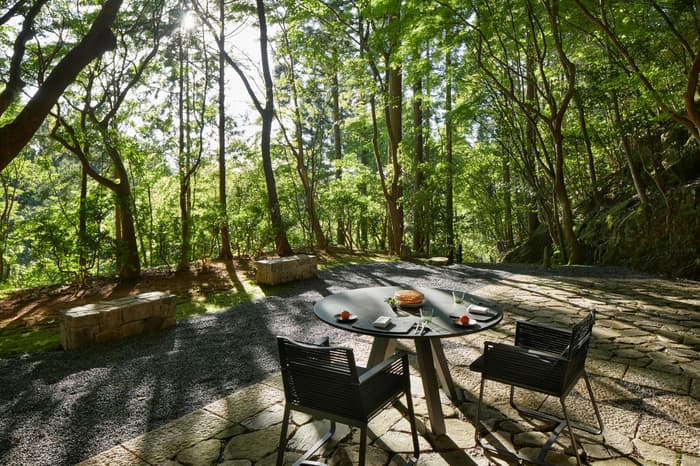
There are hotels that reference nature and hotels that are genuinely inside it. Aman Kyoto belongs to the second category without apology. Tucked behind the Kitayama mountains on grounds once belonging to a would-be imperial garden, the property feels continuous with the forest — not decorated by it. Kerry Hill Architects kept the palette honest: raw stone, pale timber, water at every turn. The pavilions read more like contemplative structures than guest rooms, and that distinction matters. What sets this Aman apart from its siblings is restraint applied to an already-restrained brand. Japan's ma — the philosophy of meaningful negative space — is not invoked as aesthetic gesture here. It operates architecturally, spatially, atmospherically. Moss gardens are tended with the same seriousness as a temple's. The indoor-outdoor baths pull rain and birdsong into a room otherwise kept utterly still. Service operates at the edge of telepathy. The result is a property that earns its reputation not through spectacle but through the consistent, almost radical refusal to overstate itself.
Osaka Kansai International Airport is the primary gateway, approximately 90 minutes by car or express rail to central Kyoto. Kyoto Station is served by Shinkansen from Tokyo in roughly 2 hours 15 minutes.
Mid-November captures peak autumn foliage across the surrounding temple gardens, while late March to early April brings cherry blossom season — both periods warrant advance booking of six months or more.
Price on request
Kyoto, Japan
View stay →